
FAQ
Is medical needling painful?
Thanks to topical numbing, most people find the treatment mildly uncomfortable, and often quite relaxing!
How long is the downtime?
Downtime is minimal. Expect light redness and slight puffiness for 24–48 hours, similar to a mild sunburn.
When will I see results?
You may notice a glow within a few hours or days, but collagen remodeling peaks around 6–12 weeks after each session.
Is medical needling safe for all skin types?
Yes—when performed by trained medical professionals, it is safe and effective for all skin tones and types.
What Medical Needling Device I do use for medical needling ?
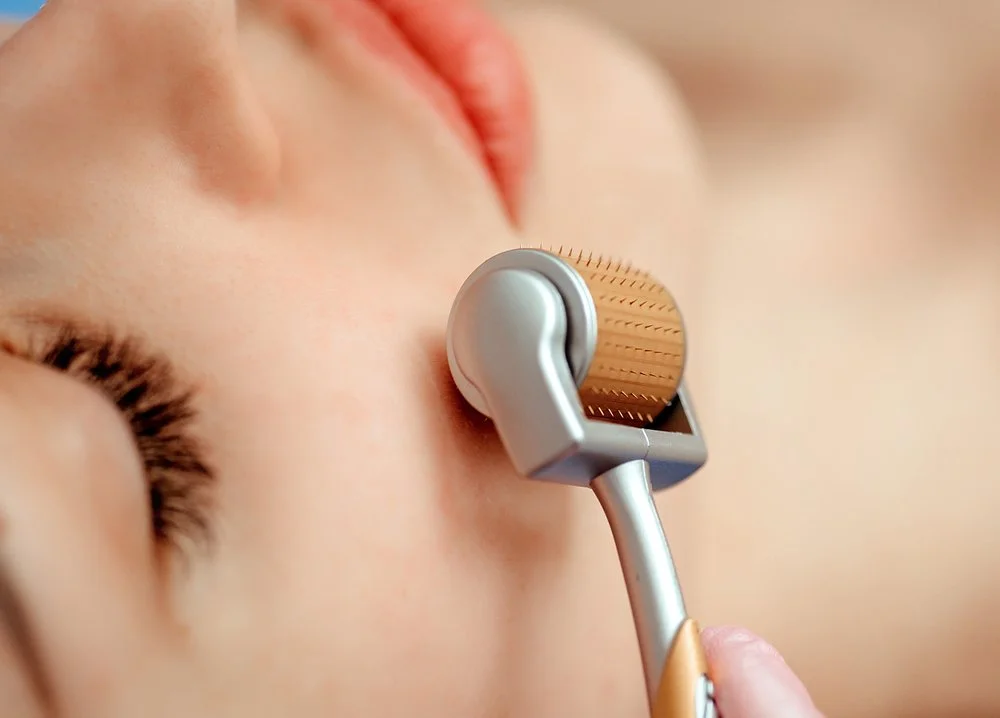
I prefer the Derma roller (invented by Dr. Des Fernandez) vs the pen because I prefer full face collagen induction, gentle but effective stimulation, consistent needle depth and efficient treatment of large areas, especially the neck.
Derma rollers have more consistent needle depth then pens
A medical-grade derma roller uses fixed, uniform needles, ensuring the same penetration depth across the treated area. This is especially helpful for:
overall collagen induction therapy
large treatment zones
maintaining uniform coverage
This consistency reduces the risk of over- or under-treating certain sections.
Derma rollers create smooth, linear micro-channels
Rollers create clean, angled micro-channels that glide across the skin in predictable paths. This can lead to:
natural collagen stimulation
less pinpoint trauma
lower risk of accidental gouging or double-puncturing
For sensitive clients, this can mean gentler treatments and reduced post-treatment inflammation.
Derma Rollers are excellent for full-face and body treatments
Because a roller moves continuously, it is highly efficient for:
face
neck
décolleté
larger body areas
A derma roller offers several advantages that make it a preferred option for many clients , especially when focusing on overall skin rejuvenation and affordability. Because the roller uses a fixed, uniform needle depth and a smooth rolling motion, it provides consistent coverage across the entire treatment area. This makes it ideal for those seeking full-face collagen stimulation, enhanced product absorption, and easy maintenance at home (when using cosmetic-grade rollers).
Derma rollers are also generally gentler on the skin’s surface. While pens rapidly stamp the skin and can cause pinpoint trauma, a roller glides in a controlled path, producing even micro-channels with less likelihood of over-treating a specific area. For sensitive skin types, this means less irritation and quicker recovery.
Are there contraindications of Medical Needling?
Your safety and wellbeing are our top priority. For this reason, certain conditions may mean that treatment is not suitable at this time.
Pregnancy: We do not recommend treatments during pregnancy.
Please share your full medical history with your practitioner and complete the attached questionnaire so we can customize your care and address any concerns right away.
When Treatment Is Not Advised
To keep your skin healthy and ensure the best results, we cannot perform the treatment if you have:
A collagen-related condition
Porphyria
Skin cancer or pre-cancerous areas in the zone we would be treating
lupus
Active acne - if you currently have active breakouts, we may need to delay your session until the skin calms. In some cases, your practitioner may discuss a special pre-treatment preparation that allows us to safely move forward.
Possible Side-Effects and Risks
Although complications are rare, it is important to understand the following potential side-effects associated with this procedure:
Temporary Numbness: Topical anesthesia can cause short-term numbness or tingling in the treated area.
Temporary Darkening of Pigmented Areas: Existing hyperpigmentation may temporarily darken before it improves. This darkness then flakes away revealing new skin growth.
Skin Sensitivity: The skin may feel temporarily more sensitive following treatment.
Mild Pain: Discomfort is generally minimal and described as similar to the sensation of a tattoo.
Bruising: Mild to moderate bruising may occur and usually resolves on its own.